
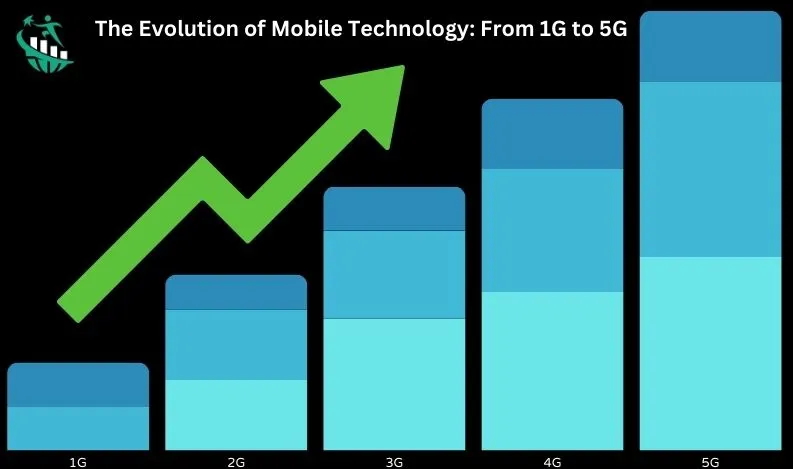
The Evolution of Mobile Technology: From 1G to 5G
Portable innovation, incorporating cellular networks and different generations (1G, 2G, 3G, 4G, 5G), has become a basic part of our regular routines, reforming the manner in which we convey, work, and access data remotely. This investigation will dig into the vital achievements and headways that have formed the scene of portable innovation, cell organisations, and the development from the original (1G) to the fifth era (5G).
1G: The First Generation:
Introduction to 1G:
The approach of portable innovation as the original (1G) denoted the initial introduction of remote cellular communication. Presented in the mid 1980s, 1G was portrayed by simple signals and voice-driven correspondence, establishing the groundwork for ensuing ages.
Key features and limitations:
1G organisations had a restricted limit, permitting only essential voice calls with no help for information transfer. The innovation was vulnerable to interference and fell short on security highlights seen in later ages, highlighting the early difficulties of mobile availability.
Historical context and deployment:
The introduction of 1G networks was a huge move toward making versatile correspondence generally accessible, but with restricted inclusion principally in metropolitan regions.
Impact on communication:
Regardless of its limits, 1G showed the capability of remote communication, laying the basis for the development of cell phones and future broadcast communications progressions.
2G: The Rise of Digital Communication:
Introduction to 2G:
The subsequent age (2G) arose during the 1990s, presenting advanced ccommunicationand beating large numbers of the disadvantages of 1G. This progress from simple to advanced essentially further developed voice quality, information, and the general effectiveness of remote media communications.
Transition from analog to digital:
2G supplanted simple signals with computerised ones, altogether further developing voice quality and lessening interference. This shift enabled more productive utilisation of the accessible recurrence range, improving the overall remote communication experience.
Advancements in voice quality and messaging:
With the introduction of 2G, voice calls became clearer and more dependable. Furthermore, Short Message Service (SMS) was introduced, reforming the manner in which individuals communicated remotely through their cell phones.
3G: Mobile Data and Internet Access:
Introduction to 3G:
The third era (3G) achieved a change in perspective in portable innovation by presenting versatile information and web access in the mid 2000s. This development marked a pivotal step in the right direction toward improved mobile network and organisation advancement.
Evolution towards data transmission:
3G organisations worked with data transmission, empowering clients to peruse the web, send messages, and participate in further developed types of correspondence past voice calls and instant messages. This was obviously a huge step forward in the accessibility of data through cell phones.
Introduction of mobile internet:
The presentation of portable web opened up additional opportunities, permitting clients to get to data in a hurry and making ready for the cell phone time. This was obviously a crucial step in the development of mobile networks and the manner in which people connected with their cell phones.
Enhanced multimedia capabilities:
3G organisations upheld media applications, empowering the web based on recordings and music on cell phones. This improved the general user experience and set up the mixed media-rich capacities of later generations.
4G: The Era of High-Speed Connectivity:
Introduction to 4G:
The focus of the fourth generation, or 4G, of mobile technology was on high-speed data transmission, advanced mobile applications, and the evolution of networks.
Focus on high-speed data transmission:
4G organisations gave quicker data speeds, enabling consistent video streaming, online gaming, and other data-intensive applications. This was obviously a groundbreaking change in the capacities of cell phones and remote correspondence.
Impact on mobile applications and services:
The rapid network provided by 4G networks spurred the improvement of many versatile applications and services, changing the manner in which individuals connected with their devices. This time saw a multiplication of versatile applications, underscoring the interconnectedness of portable innovation and regular day-to-day existence.
Introduction of LTE technology:
Long-haul Development (LTE) innovation turned into a foundation of 4G, conveying further developed execution and proficiency in information transmission. This innovation played a vital part in improving the overall speed and reliability of mobile networks.
5G: The Next Frontier:
Introduction to 5G:
The fifth era (5G) addresses the ongoing boondocks of portable innovation, promising significantly higher information speeds, lower inactivity, and extended abilities. As the most recent move toward network advancement, 5G is set to transform remote communication and mobile availability.
Key features and improvements over 4G:
5G flaunts essentially quicker data speeds, diminished latency, and the capacity to at the same time interface an enormous number of devices. These enhancements are vital for supporting emerging advancements like the Internet of Things (IoT) and increased reality. The development of 5G demonstrates how important it is to the development of wireless communication and mobile devices in the future.
Enhanced data speeds and reduced latency:
5G's primary goal is to offer data speeds like no other, making it possible to stream high-definition content without buffering and download large files in a matter of seconds. Furthermore, the decreased latency improves constant communication and responsiveness, making way for innovative applications and services
Impact on IoT, AI, and other emerging technologies:
5G's capacities go beyond private correspondence, stretching out to help a huge swath of associated gadgets in the Web of Things (IoT) biological system. It likewise plays an important part in empowering the integration of man-made reasoning (computer-based intelligence) into portable applications and administrations, epitomising the interconnected idea of current remote correspondence.
Challenges and Concerns:
Potential drawbacks of advanced mobile technologies:
In spite of the various advantages, high-level portable advancements, including 5G, present difficulties like increased energy consumption, infrastructure requirements, and potential well-being concerns connected with radiofrequency radiation. Addressing these worries is fundamental for guaranteeing the capable advancement of portable innovation and organisation availability.
Security and privacy considerations:
The importance of protecting user data's privacy and security grows as mobile technology develops. Issues, for example, information breaks, digital assaults, and unapproved access present moves that should be addressed to keep up with trust in remote correspondence and cell phones.
Environmental concerns:
The arrangement of large portable organisations and the development of gadgets add to electronic waste and environmental impact. Offsetting innovative advancement with ecological sustainability is a continuous test that requires an all encompassing way to deal with versatile innovation and organisational development.
Future Trends:
Exploration of potential future developments in mobile technology:
Looking forward, the fate of versatile innovation might include headways, for example, much quicker information speeds, more ubiquitous reception of 5G, and the investigation of 6G and then some. It is likely that advancements in network infrastructure, materials science, and battery technology will have a significant impact on the future of mobile devices and wireless communication.
Integration with other technologies:
Versatile innovation is progressively interwoven with other emerging advances, like computerised reasoning, virtual reality, and augmented reality. The consistent incorporation of these innovations has the possibility to change how we communicate with cell phones, underscoring the interconnected idea of current media communications.



Recent Comments:
No comments yet.